How Davis Weather Affects Your Concrete Driveway and How to Make It Last Longer
Learn how Davis, CA weather impacts concrete driveways and what homeowners can do to prevent cracks, drainage issues, and early wear. Get expert local tips.
3/13/20264 min read
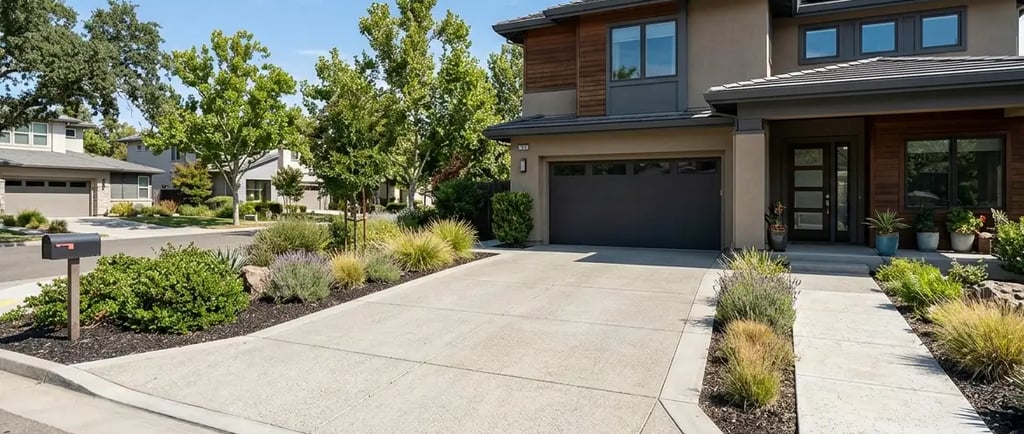
Your driveway works hard every day. It supports vehicle weight, handles foot traffic, and sits outside through every season Davis has to offer. In our area, that means long, hot, dry summers, occasional triple-digit heat, and cooler, wetter winter conditions. Those swings matter because concrete expands, contracts, and dries over time, which is one reason small cracks can develop if the slab is not properly designed, jointed, installed, and maintained.
For homeowners in Davis and throughout Yolo County, understanding how local conditions affect concrete can help you protect your investment and avoid bigger repairs later. A well-installed driveway is built for durability, but long-term performance still depends on drainage, joint placement, curing, and routine upkeep.
Why Davis Climate Can Be Tough on Concrete
Davis has a Mediterranean climate with hot, sunny summers and mild winters. The City of Davis notes that summer temperatures often sit in the low 90s and can exceed 100°F on some days. Heat alone does not ruin quality concrete, but repeated thermal movement, drying, and water intrusion at joints or cracks can contribute to surface wear and cracking over time.
Common local stress factors include:
Summer heat and sun exposure
Rainwater collecting near the slab in winter
Drying shrinkage as concrete cures and ages
Movement from subgrade or moisture changes
Heavy vehicle loads on weaker or older driveways
That is why local installation quality matters so much. Homeowners are not just paying for concrete. They are paying for proper base prep, reinforcement strategy, joint layout, finishing, and drainage planning.
1. Heat and Sun Can Increase Surface Stress
Concrete naturally expands and contracts with temperature changes. In Davis, where summer heat can be intense, driveways exposed to full sun can experience a lot of daily thermal movement. This is one reason control joints are important: they help manage where cracking happens rather than leaving it to chance. Industry guidance from NRMCA notes that cracks cannot be prevented entirely, but they can be controlled and minimized with properly designed joints.
What homeowners can do:
Keep an eye on hairline cracks before they widen
Make sure joints remain in good condition
Avoid assuming every crack is “normal” if it starts growing or spreading
Schedule an inspection when sections begin shifting or separating
If your existing driveway is badly cracked, worn, or no longer draining correctly, it may be time to explore concrete driveway installation in Davis, CA.
2. Water Is One of the Biggest Long-Term Threats
Even in a relatively dry climate, water is still a major issue for concrete. Moisture that enters through unsealed joints or surface defects can contribute to deterioration below and around the slab. The American Concrete Pavement Association notes that sealing or filling joints can help protect against problems such as spalling and softening of the base or subgrade.
Warning signs of water-related trouble:
Water pooling on the driveway after rain
Erosion or soft spots near slab edges
Joints that are open, broken, or collecting debris
Uneven sections or early settlement
A good driveway should shed water away from the slab and away from your home. If drainage is poor, the best repair is not always a patch. Sometimes the smarter move is correcting slope, replacing failing sections, or upgrading the entire surface.
3. Small Cracks Are Common — Large Cracks Need Attention
Many homeowners worry the moment they see a crack. The truth is, concrete can develop small cracks over time because it is strong in compression but weaker in tension. Shrinkage and movement are part of the material’s behavior, which is why joints are used in the first place.
That said, not all cracks should be ignored.
Call a professional if you notice:
Cracks that keep widening
Uneven slab sections
Multiple branching cracks
Sinking corners or edges
Water entering and staying in the crack
These signs may point to deeper issues with the base, drainage, or slab condition.
4. Good Installation Makes a Huge Difference
A driveway’s lifespan is heavily influenced by how it was built from the start. Proper subgrade preparation, thoughtful joint spacing, and curing all affect durability. Poor workmanship often shows up later as early cracking, uneven settling, weak edges, or surface damage. NRMCA and related industry guidance emphasize that curing and maintenance improve concrete strength and durability, while jointing helps manage cracking.
A quality driveway installation should include:
Stable site and base preparation
Proper thickness for expected use
Correct joint layout
Reliable finishing and curing practices
Drainage planning that fits the property
For broader flatwork needs beyond driveways, homeowners can also explore concrete paving services in Davis.
5. Sealing and Maintenance Help Extend Driveway Life
Concrete is low-maintenance, but it is not no-maintenance. Industry maintenance guidance recommends protecting concrete from moisture intrusion and maintaining joints and sealers as needed.
Simple maintenance steps that help:
Sweep and rinse regularly to prevent dirt buildup
Watch for standing water after rain or irrigation
Seal when appropriate based on surface condition and product recommendations
Repair minor joint or crack issues early
Avoid letting heavy loads sit on weak edges
Keep nearby drainage working properly
These steps are simple, but they can help delay more expensive repairs.
6. When Repair Is Enough — and When Replacement Makes More Sense
Not every aging driveway needs to be torn out. Surface wear, minor cosmetic issues, or isolated trouble spots can sometimes be repaired. But if your driveway has widespread cracking, drainage problems, settlement, or recurring deterioration, replacement is often the better long-term investment.
A professional on-site inspection is the best way to tell the difference. The goal is not just to improve appearance. It is to make sure the driveway performs well for years in real Davis conditions.
7. Why Local Experience Matters in Davis, CA
Concrete work is never one-size-fits-all. Local climate, soil behavior, drainage patterns, and property layouts all influence what works best. Davis homeowners benefit from working with a contractor who understands the area and knows how to build concrete surfaces for both hot summers and seasonal rain. The City of Davis highlights the area’s hot, dry summers and mild winters, and those patterns should absolutely be part of any driveway planning conversation.
How to Help Your Driveway Last Longer in Davis
Here is the short version:
Choose a contractor who prioritizes proper base prep and drainage
Do not ignore pooling water or widening cracks
Maintain joints and sealers over time
Address small issues before they become structural ones
Invest in quality installation instead of the cheapest short-term option
Final Thoughts
A concrete driveway is a major part of your home’s function, curb appeal, and daily convenience. In Davis, CA, the combination of summer heat, seasonal moisture, and normal concrete movement means quality installation and maintenance matter more than many homeowners realize.
At Davis Concrete Services, we help homeowners build and maintain concrete surfaces designed for local conditions. Whether you need a new driveway, an expert opinion on cracking, or a long-term upgrade plan, our team is here to help.
Ready to get started? Contact Davis Concrete Services today for a free quote.
Contact Your Local Concrete Experts Today
Ready to join the growing list of satisfied clients who can't stop talking about our exceptional work? Schedule your consultation today to explore how our proven expertise and community-endorsed reputation can elevate your concrete project from concept to completion with the craftsmanship and reliability that property owners demand.
530-212-3931
info@davisconcreteservices.com
© 2025. All rights reserved.
Hours
Monday - Friday: 7:00am - 5:00pm
Saturday: 8:00am - 4:00pm
Davis, California